Journey to Kathmandu Part 3: Swayambhunath
·

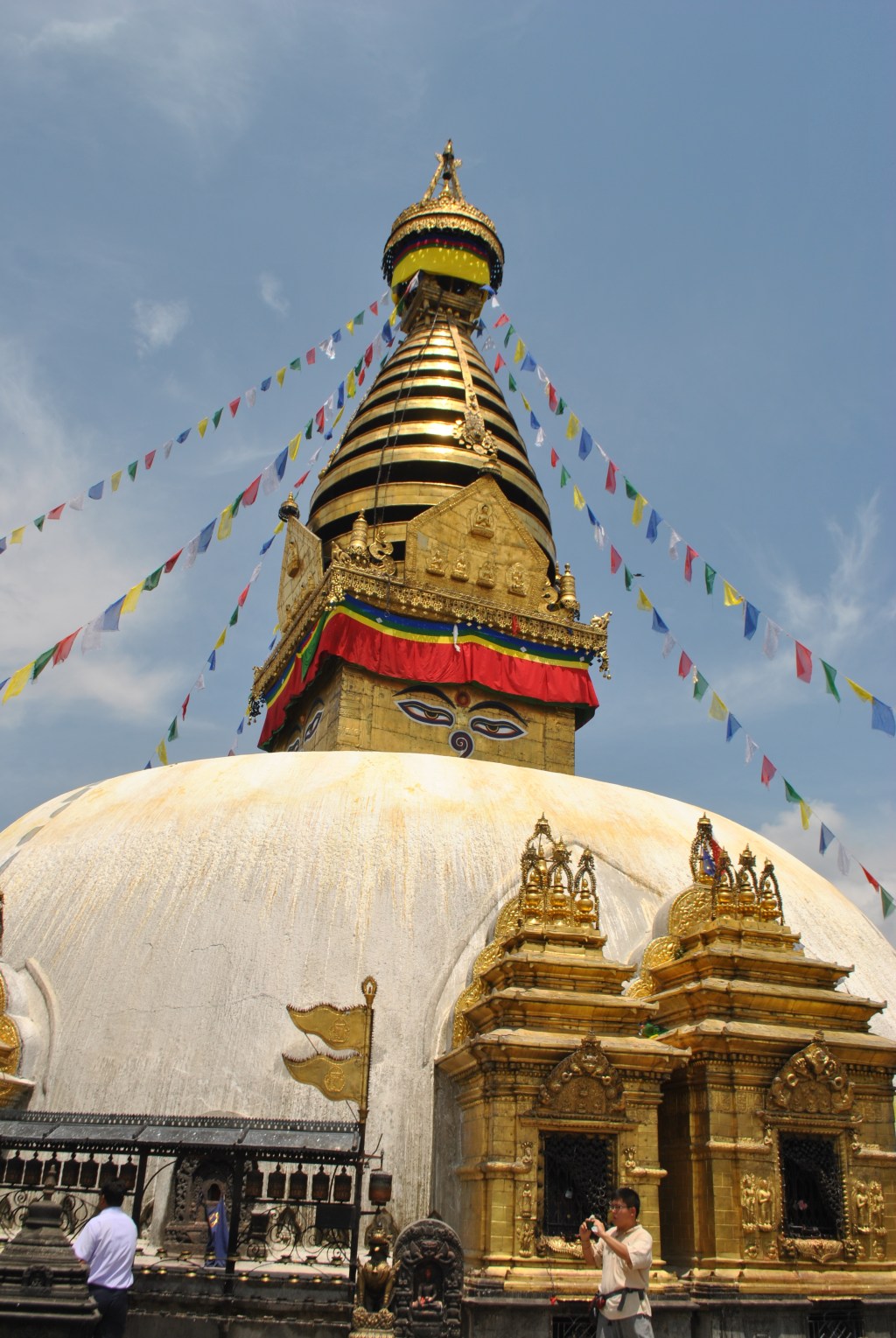
On the outskirts of Kathmandu, lifted high above the tight-knit city streets, is Swayambhu. It is not the largest stupa in Nepal. Nonetheless, it has been a site of devotion for centuries. Atop the white dome sits a golden spire from which the gleaming eyes of the Buddha gaze at the valley and the devotees who circle below.
Nestled between smaller stone stupas, a monk blesses a small child held in his mother’s lap. A young man clasps his hands in a mudra, eyes closed and face tilted up toward the sun as his mouth moves in a silent mantra. A man circles the stupa, stopping every few feet to lay flat on the ground in prostration.
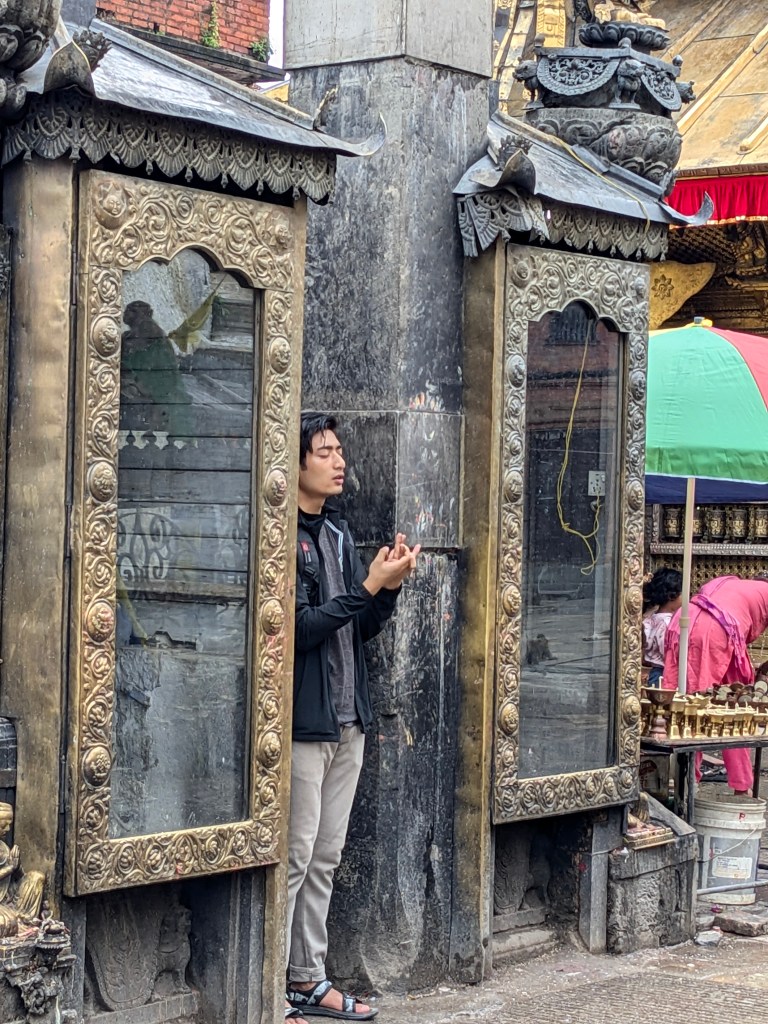
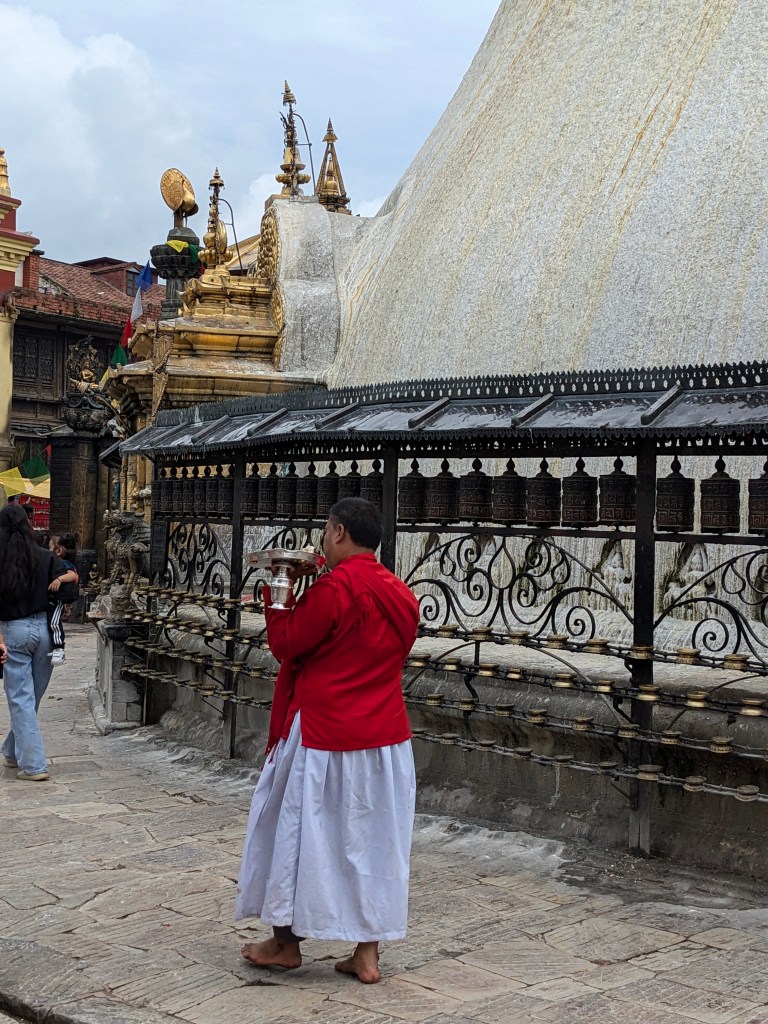
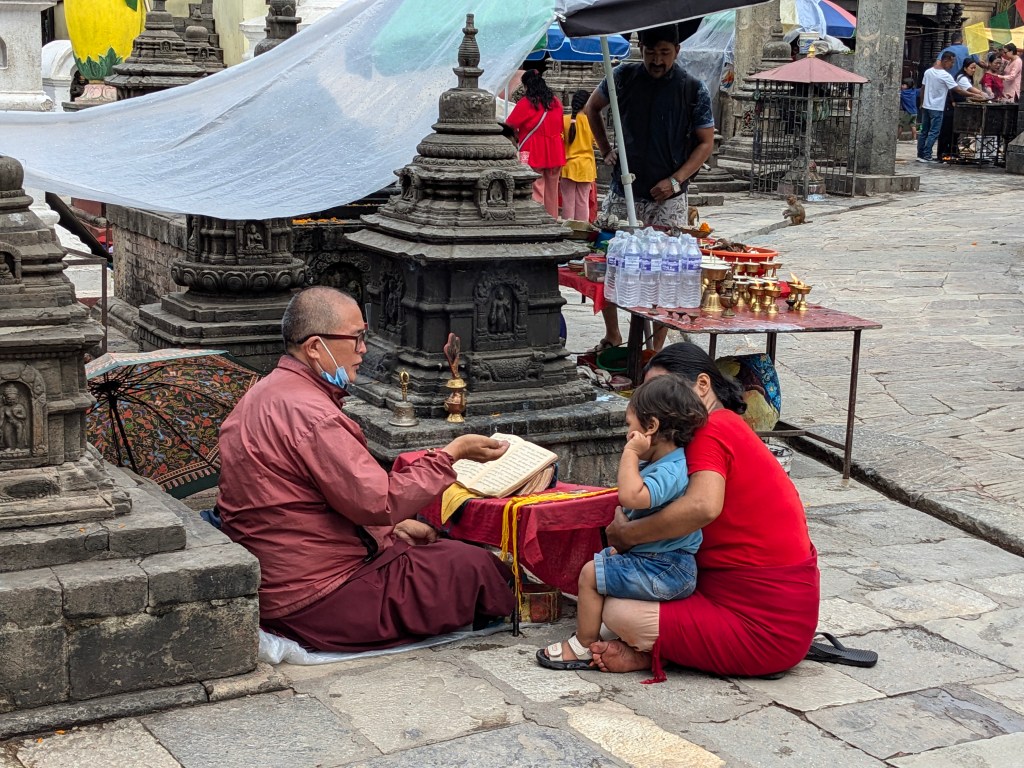

In Nepal the holy blends in with the every day. Spirituality is not relegated to a certain place or time. Rhesus monkeys lounge upon the small stupas, grooming and squabbling. If you were to walk the streets below, you would find shrines on almost every corner– and sometimes two or three within steps of each other. On the way to school, students and business people ring brass bells strung up on shrines. With each morning comes the blowing of a conch shell and the recorded chants as the neighbors say their morning prayers at their home altars.
And yet, it is a distinct feeling to sit in a place like Swayambhu, where people have poured out their prayers and devotion for lifetimes upon lifetimes. Amid the noise of people talking and singing, dogs barking, and monkeys chattering is a profound stillness.
A grandmother slowly begins to circle the stupa supported by her cane. She moves stiffly, clutching her prayer beads in her other hand. Faster circumambulators pass her by, but she walks on. She has made the exhausting journey up the steps to the top of the hill where the stupa resides. Undoubtedly, she must visit Swayambhu every week, if not every day.
It is incredibly moving to witness devotion in the face of difficulty, even in an example so simple as aching joints and fatigue. Every person knows the experience of when strength fails, of when it would be much easier to just stay at the bottom of the hill.
The practice of circumambulation is present in all major religions. It seems to be a universal human desire that once we find something sacred, we circle it. We come back to it over and over and over. We place it in the center and wrap our lives around it. Our lives are not one great journey with a beginning and end miles apart. We do not have to get from here to there. Life is a circling. From complete to complete to complete.
What is it that you place at the center of your life?

 Monika Karna Writes
Leave a comment